
Welcome to the Mathematical World!
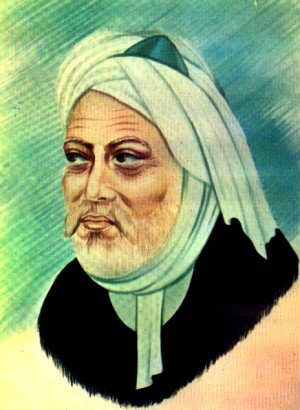
Sharaf al‑Dīn al‑Ṭūsī
Iranian Mathematician and Architect of Early Algebraic Geometry
Not to be confused with Nasir-ud-Din al-Tusi!!! (Clickable Link)
Sharaf al‑Dīn al‑Muẓaffar ibn Muḥammad ibn al‑Muẓaffar al‑Ṭūsī (c. 1135 – c. 1213 CE) hailed from Tus in present-day Iran. He was a distinguished mathematician and astronomer of the Islamic Golden Age, celebrated for his deep insights into cubic equations and contributions that anticipated algebraic geometry.:contentReference{index=0}
Life and Academic Lineage
Around 1165 CE, al‑Ṭūsī taught mathematics in Damascus, then moved to Aleppo and later to Mosul, where he mentored the notable Kamal al‑Dīn ibn Yūnus. His reputation as “outstanding in geometry and the mathematical sciences, having no equal in his time” highlights his esteem among contemporaries.:contentReference{index=1}
Mathematical Innovations
Al‑Ṭūsī made groundbreaking contributions to the theory of cubic equations:
- He pioneered what later mathematicians would recognize as the Ruffini–Horner method for numerically approximating cubic roots.:contentReference{index=2}
- In his Treatise on Equations, he classified five types of cubic equations and identified conditions for having two, one, or no positive solutions by analyzing where the function achieves its maximum.:contentReference{index=3}
- Using modern notation, he framed the problem as solving \(f(x) = c\), determining a point \(m\) where \(f(x)\) is maximal, and then concluded:
\[ \begin{cases} c < f(m) & \text{two solutions},\\ c=f(m) & \text{one solution},\\ c> f(m) & \text{no solution}. \end{cases} \]
He effectively anticipated the use of a function’s discriminant to analyze root behavior, a foundational insight of algebraic theory.:contentReference{index=4}
His approach is seen as inaugurating algebraic geometry—studying curves via their equations—even though some scholars debate whether it was the curves that guided his equation-solving.:contentReference{index=5}
Astronomy and Instruments
Al‑Ṭūsī also engineered an innovative astronomical tool known as the linear astrolabe or “Tusi’s staff”—a simpler variant of traditional astrolabes, though it did not become widely adopted.:contentReference{index=6}
Legacy and Recognition
- His methods significantly influenced subsequent scholars, including Nasir al‑Dīn al‑Ṭūsī.:contentReference{index=7}
- An asteroid, 7058 Al‑Ṭūsī, was named in his honor.:contentReference{index=8}
- Modern historians of mathematics recognize him as a pivotal figure in the evolution toward analytic geometry and function theory.:contentReference{index=9}

All rights reserved by the Mathematical Unity
Contact: +8801400044645
Email: mathematicalhorse1453@gmail.com
Our Discord Server: Mathematical Unity [Ulus Riyadiyat]